
Laser Tattoo Removal
Tattoos have become an increasingly common and acceptable form of SELF-EXPRESSION in our society.
It is estimated that over 30% of Canadians have tattoos, with millennials and Gen-X showing the highest rates of ink.
Tattoo regret occurs in a reported 15 to 20% of cases due to such life changes, as relationships and careers, evolving personal taste, poor tattoo quality or placement, or simply tiring of the design. Other issues such as fading or obscured ink or misspelled text may also prompt removal. Laser technology is the most common current method of tattoo removal, as the older methods of dermabrasion and surgical excision are more invasive and carry a higher risk.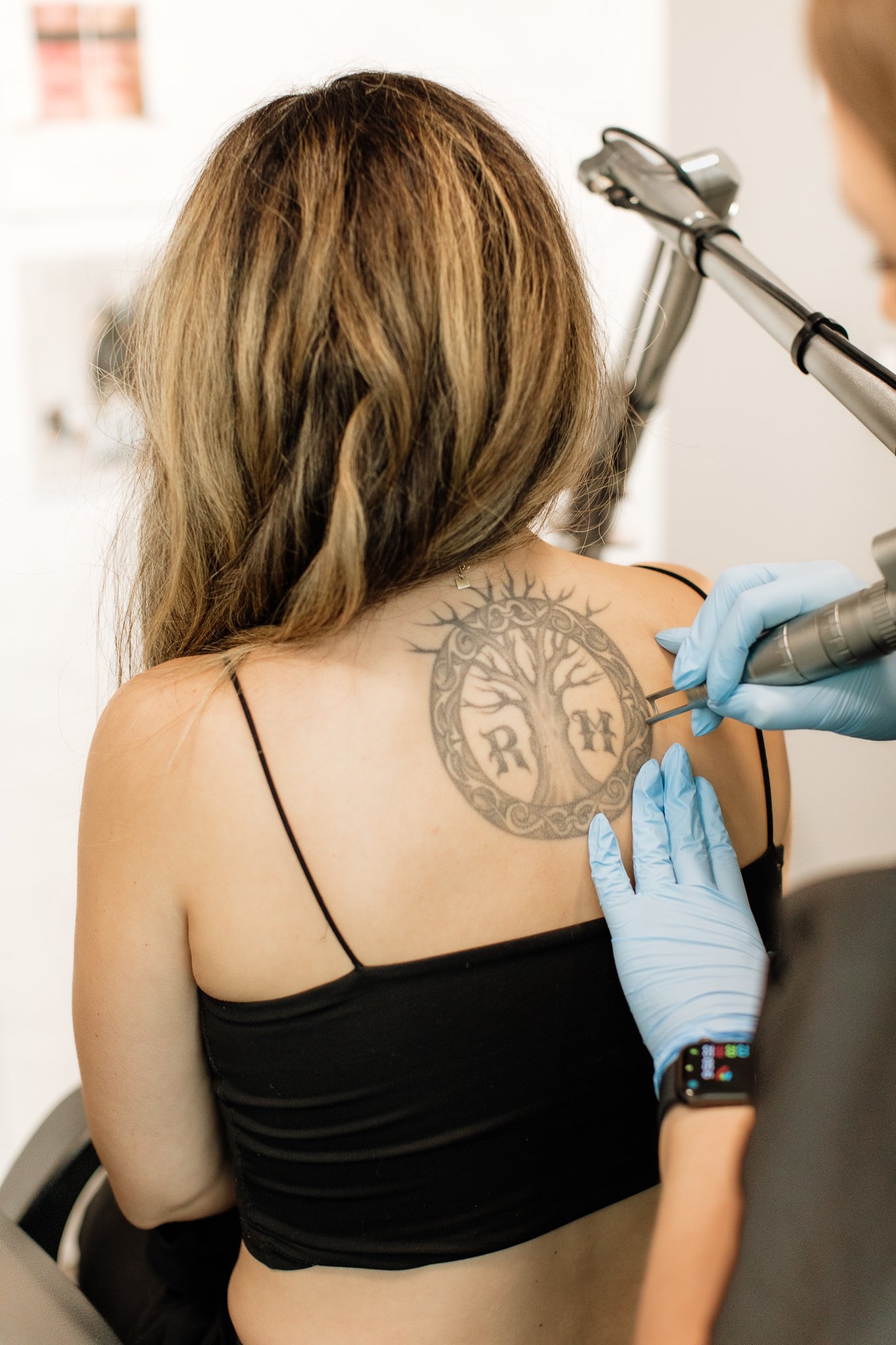
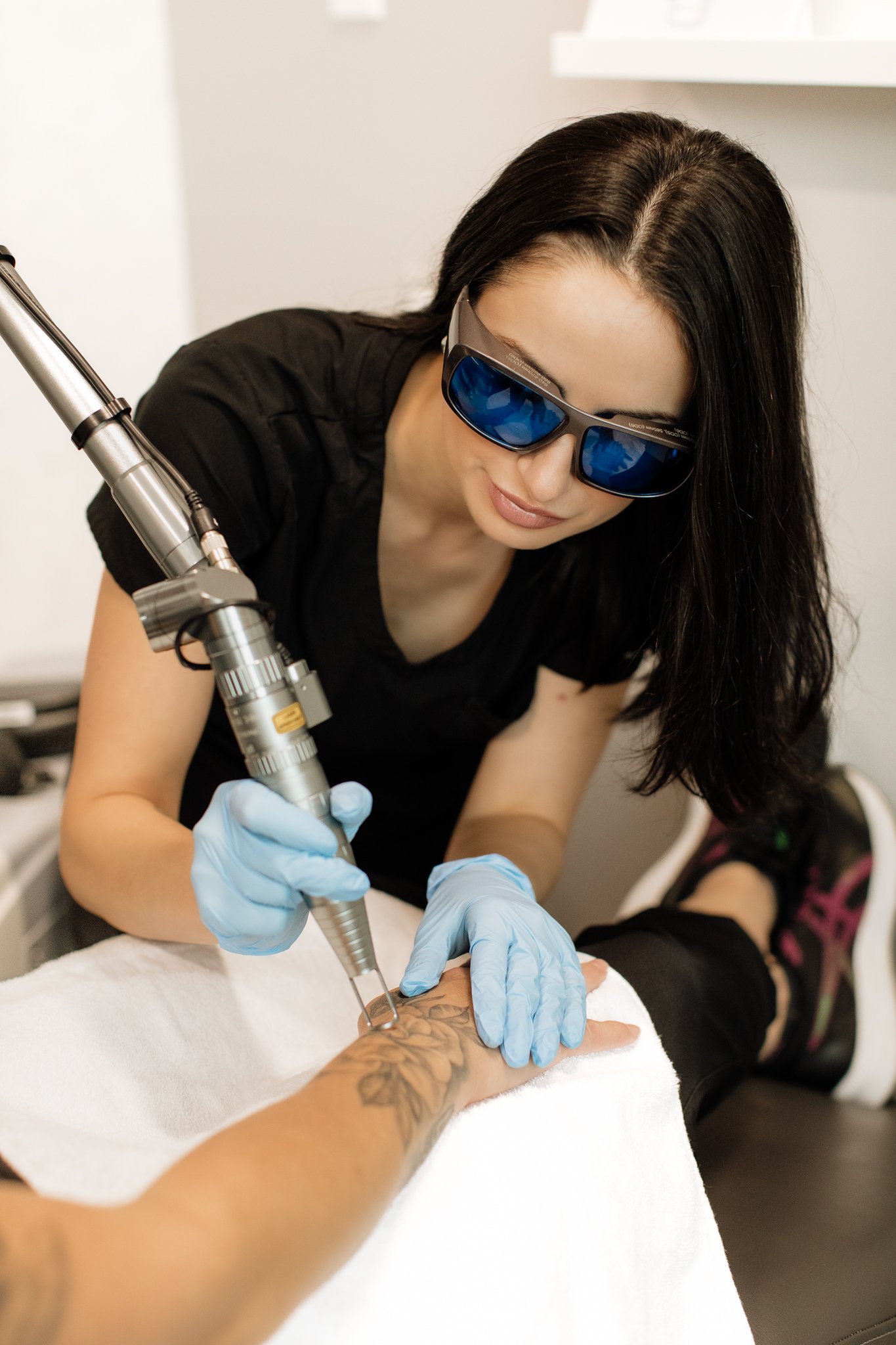
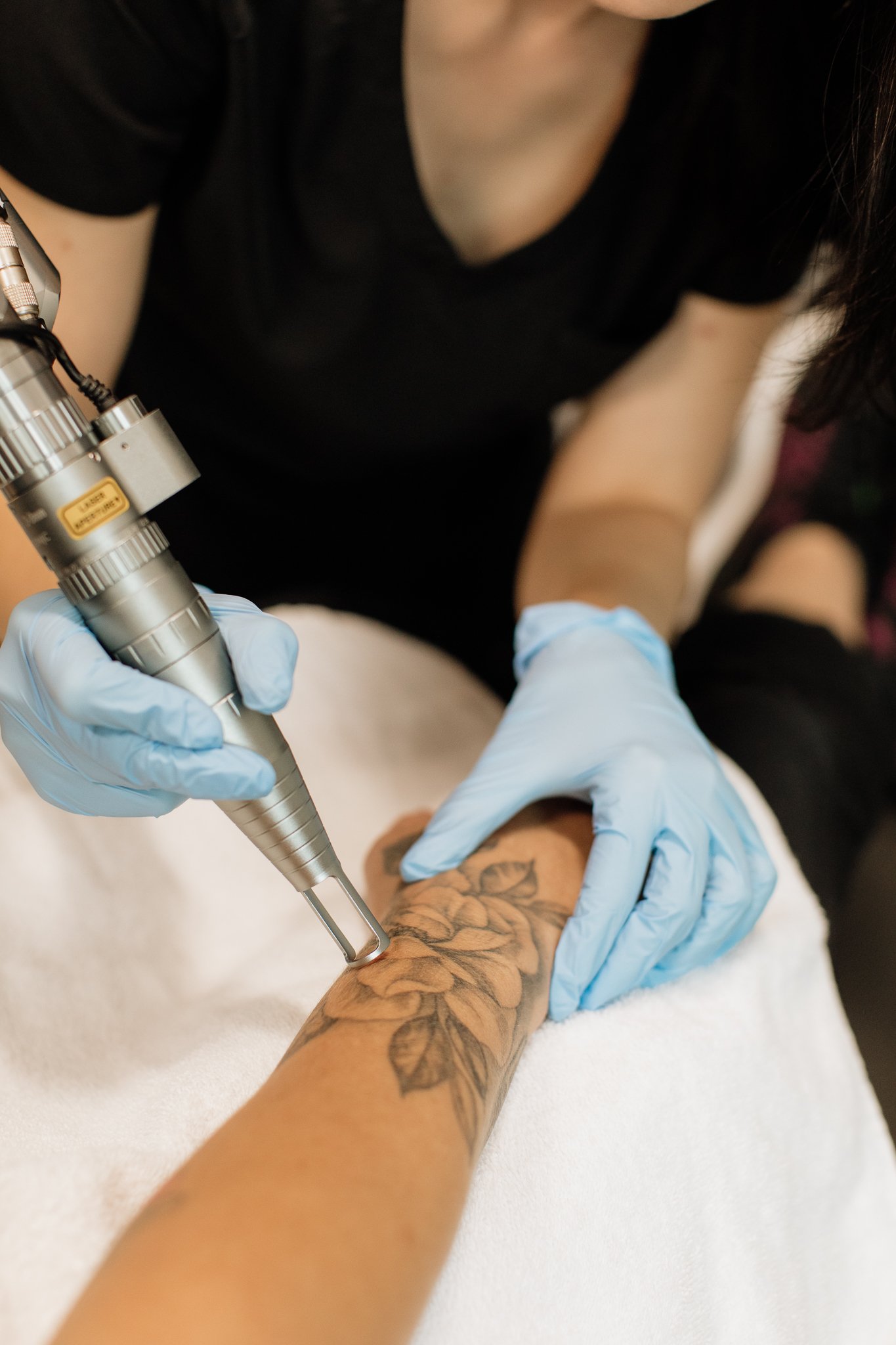
Laser treatment targets ink particles in the skin. The laser used to remove tattoos delivers powerful light energy that breaks ink into smaller fragments that the immune system can eliminate.
At Midwest Laser Centre, we utilize a Q-switched Nd:Yag laser with nanosecond technology for laser tattoo removal.
Laser tattoo removal typically requires multiple treatments to reduce the size of ink particles, making them easier for the immune system to eliminate. Depending on the tattoo design, size, and color, removing the ink can take an average of eight to twelve laser sessions. Some ink colours might not be completely removed. Laser sessions should occur at least eight weeks apart to allow the body to absorb as much ink as possible and to permit healing.
Most tattoos can be removed successfully; however, some tattoos may be resistant or may only lighten. Black ink is generally the easiest to remove. Warmer colors can require more sessions and specialized laser wavelengths.
White: The most difficult, it reflects laser energy instead of absorbing it and can even turn gray or black.
Yellow & Orange: Absorb less laser energy and blend with skin tones, making them hard to target.
Light Blue & Green: These vibrant, lighter shades are harder to break down than darker colors.
Pinks & Pastels: Like yellow and orange, they reflect light and require more effort.
Red & warmer tones: While easier than yellows, they typically require more sessions than black ink.
A consultation at Midwest Laser Centre is required before treatment. We may recommend fading the tattoo either if a client has planned a tattoo “cover-up” or if a full removal is unlikely to be achieved. In such cases, we may also recommend a cover-up tattoo.
How does laser tattoo removal work?
Pre-treatment considerations:
The area to be treated should be free of tan or recent UV exposure to minimize the risk of a blister or burn.
Medications such as Accutane (tretinoin) and doxycycline are sun-sensitizing; we recommend they be discontinued before treatment. Reviewing medications and health conditions during your consultation is essential to ensuring the procedure is performed safely.
Laser tatoo removal treatments
The skin should be free of lotions or other skincare products and will be cleansed before each treatment.
Topical numbing may be used before laser treatment to reduce discomfort.
Our staff routinely take photos before treatment for documentation purposes and to follow results.
Consent is taken, ensuring understanding of treatment, typical results, post-treatment recommendations, and possible side effects and risks.
Laser tattoo removal is uncomfortable to painful. Many describe it like having a heavy rubber band snapped against the skin repeatedly, with a burning sensation. In addition to applying topical numbing, we may use ice packs or a cooling device during and immediately following treatment. Most of the time, laser tattoo removal is well tolerated.
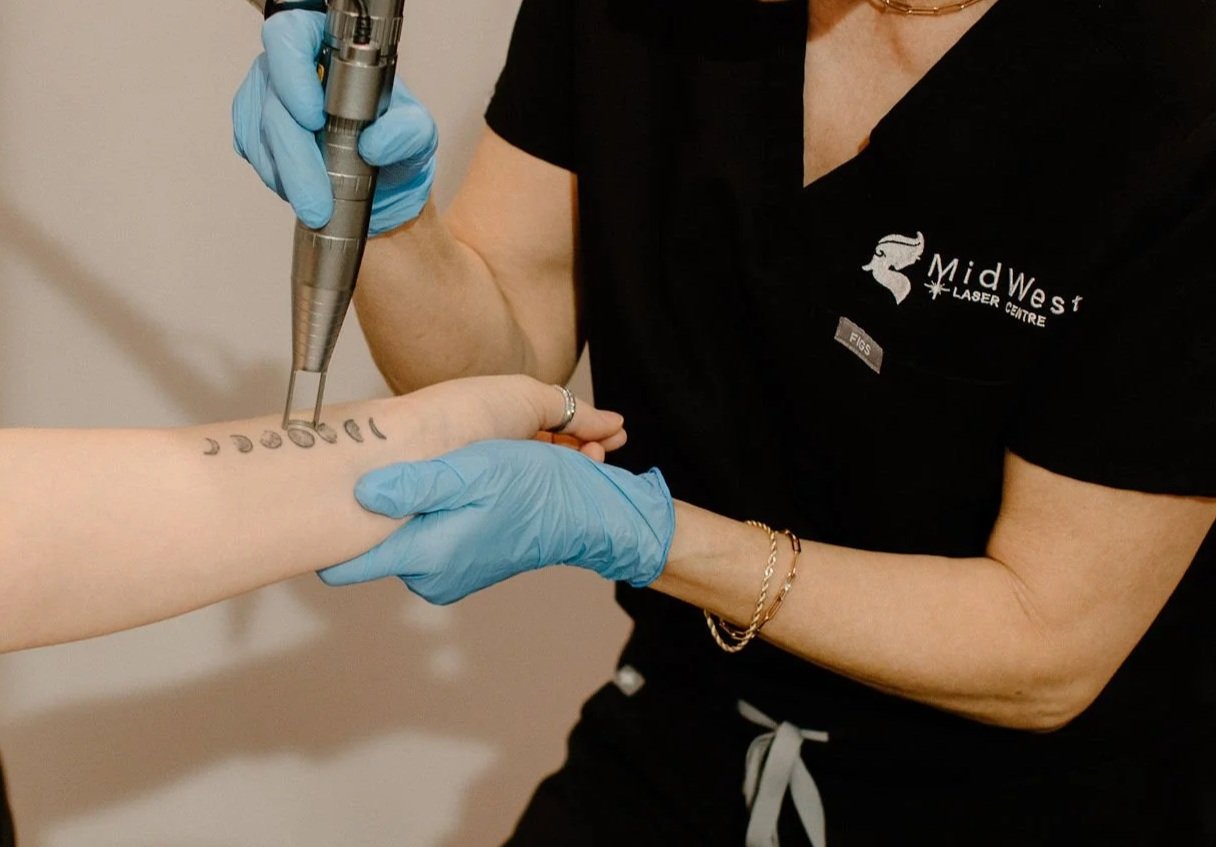
Care of the treated skin after the procedure is important. Typical post-procedure wound care includes cleaning it daily with soap and water, applying antibiotic ointment, and keeping it covered with a dressing until it heals.
The skim needs time to heal after tattoo removal. Most side effects are temporary, with the most common reactions being redness, swelling, bruising, scabbing, and tenderness. Most of the time, these reactions resolve within a week.
The interval between treatments should be 8+ weeks to allow your body’s lymphatic/macrophage system to remove ink fragments. Treatment before this interval does not speed ink removal and is not recommended.
Post-treatment expectations and normal side effects:
Risks of laser tattoo removal:
Risks of laser tattoo removal are rare but include infection, scarring, and permanent skin discoloration (lighter - hypopigmentation or darker - hyperpigmentation).
Rarely, allergic reactions caused by an immune/histamine response to the breakdown of the ink particles may occur, which may limit the ability to perform laser tattoo removal.
Recent studies have been interpreted to suggest tattoos might slightly increase the risk of lymphoma (cancer), and laser removal could further increase this risk as ink breaks into smaller, more reactive particles that travel through the lymphatic system for removal. This link is not definitive, and no established study has proven causality.
Common Questions

-
Yes, typically this is considered a painful treatment that causes a burning sensation. We recommend the use of a topical anesthetic, especially for large tattoos. With the use of topical anesthetic (numbing), it is tolerated quite well. Ice packs are also used to help minimize the burning sensation. Some individuals may also take Tylenol or Advil 45 minutes before their booked treatment to improve tolerance.
-
Treatment sessions are booked at least eight weeks apart to allow time for your body’s lymphatic system to remove ink particles. Treatments performed sooner will not speed up or improve treatment outcome.
-
Some colors are more difficult or resistant to remove. Black ink is the easiest to remove with laser. At the time of your consultation it may be recommended you consider fading the tattoo and having a “cover-up” done.
-
Multiple sessions are required, often needing eight to twelve sessions for tattoo removal.
-
We start with a thorough consultation regarding the removal of microbladed/combo brows. The pigment used is different from traditional tattoo ink and often contains multiple pigment colors layered together. During laser removal, darker pigments (such as black, brown, or red tones) usually break down first. In some cases, the remaining pigments can reveal underlying yellow, orange, or peach tones that don’t respond well to laser treatment. Unfortunately, yellow and some orange pigments are among the most difficult colors for lasers to remove we may reach a point where the brows cannot be lightened any further. Our goal is to achieve the most fading as safely as possible, but complete removal cannot be guaranteed due to the specific pigments used during microblading.
-
The cost to remove a tattoo varies depending on the number of treatments required, which depends on the size, location, depth and color of the tattoo. Tattoo removal starts at $150 plus GST and up - A price quote is determined upon consultation with the attending technician.