
Intense Pulsed Light or Fotofacial

Intense Pulsed Light Treatment (IPL) aka Photofacial
Intense Pulsed Light (IPL) treatment is a non-invasive procedure designed to rejuvenate the skin and address pigmentation concerns. IPL is often referred to as or confused with “laser”. Although an IPL harnesses light energy for treatment, it is not a laser. IPL emits a broad spectrum (multiple wavelengths) of non-coherent light, making it fundamentally different from a laser (Light Amplification by Stimulated Emission of Radiation), whose light is necessarily monochromatic (of a single wavelength), collimated (waves running in parallel), and coherent (waves in phase).
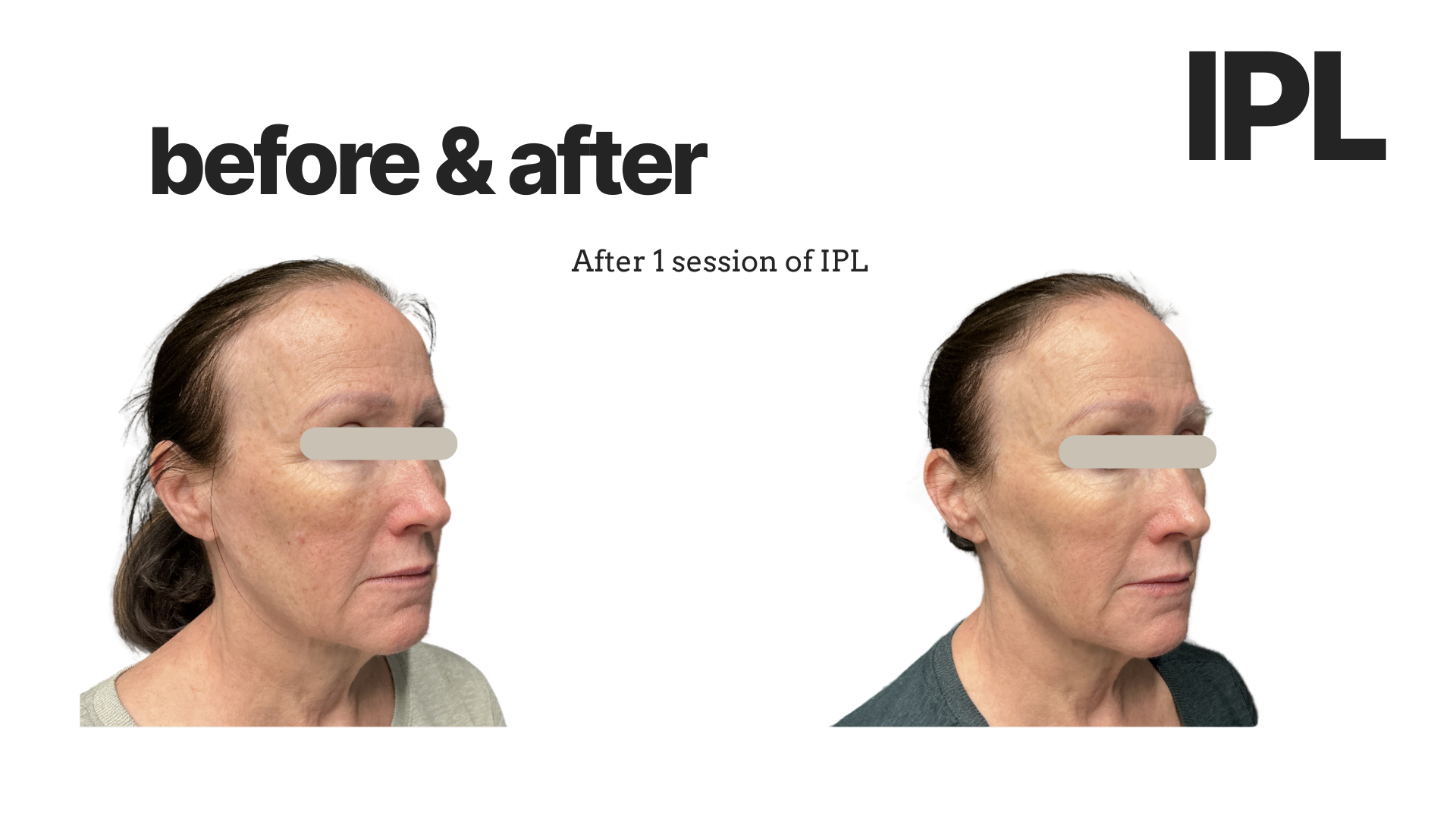
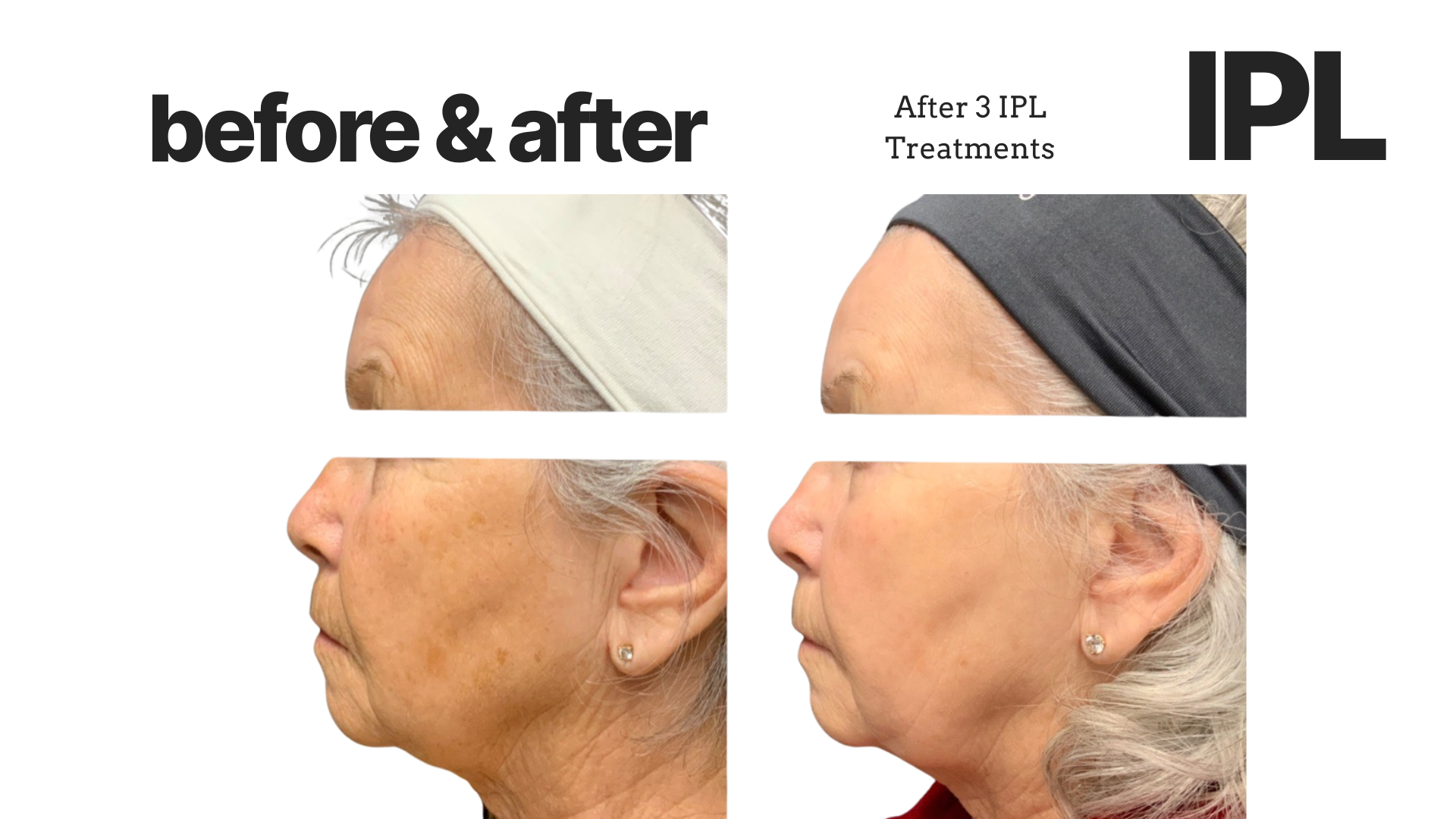
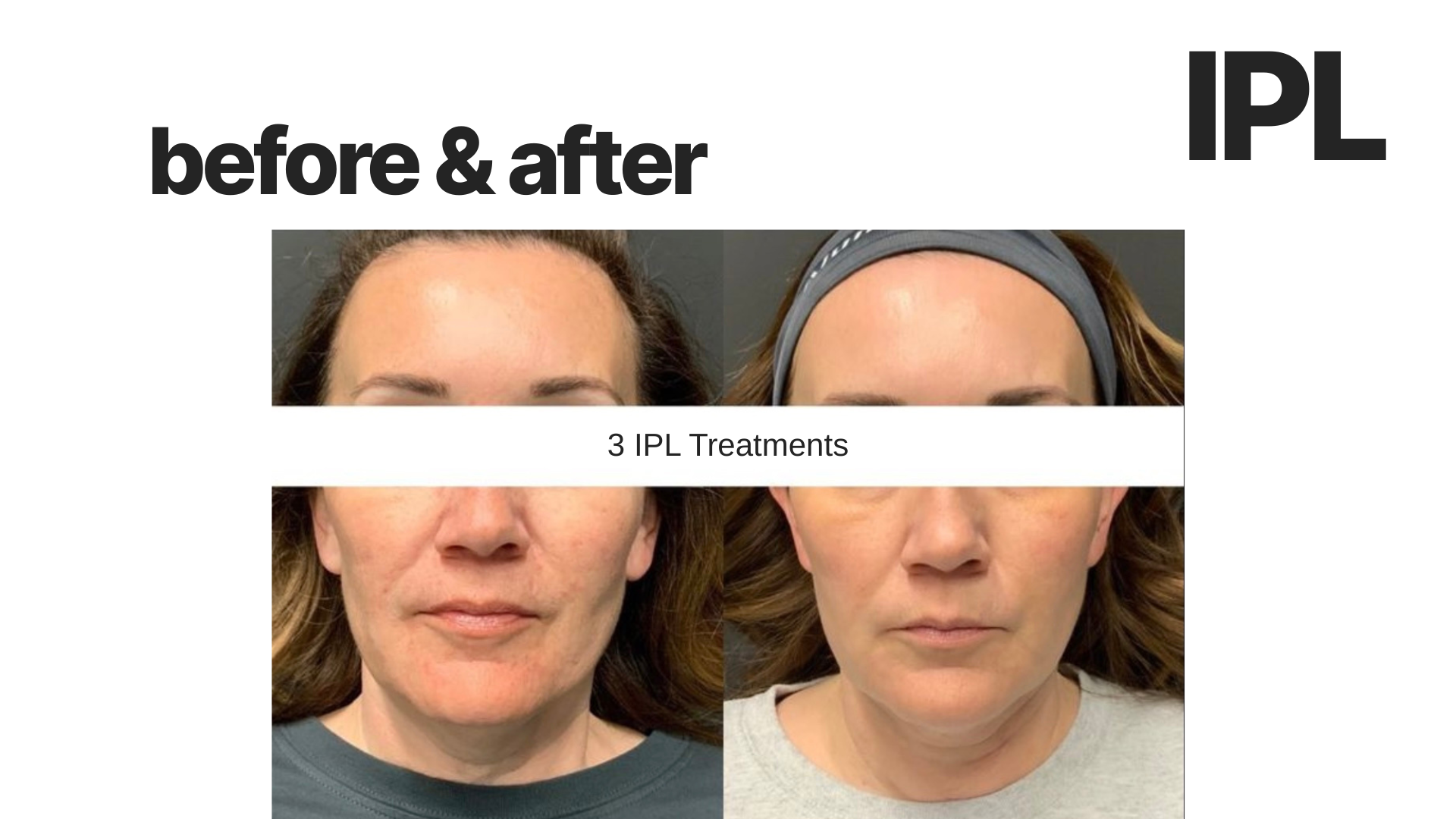
IPL devices typically work with a range of wavelengths from 500nm – 1200nm and use cut-off filters to narrow the spectrum of light used to absorb into chromophores (pigments) that we target. The chromophores targeted most frequently include melanin (brown pigment) found in sunspots and freckling from sun damage, and the hemoglobin (red pigment) of vascular lesions. The chosen wavelength of light turns into heat to achieve a therapeutic effect, breaking up unwanted brown pigment, and coagulating and destroying superficial redness and vessels.
The heating stimulates collagen production which helps rejuvenate the skin by minimizing fine lines and wrinkles.
Common benign skin concerns treated with IPL include:
age spots (solar lentigines), freckles, and diffuse sun damage
diffuse redness of rosacea, spider veins, and telangiectasia
the mild textural changes and fine lines of the aging process
IPL can also be used to:
help decrease precancerous lesions “Aks”(actinic keratoses) in the skin which in turn helps prevent BCC (basal cell carcinoma) and SCC (squamous cell carcinoma)
help manage dry eyes. Is recommended by many ophthalmologists in conjunction with prescription eye drops.
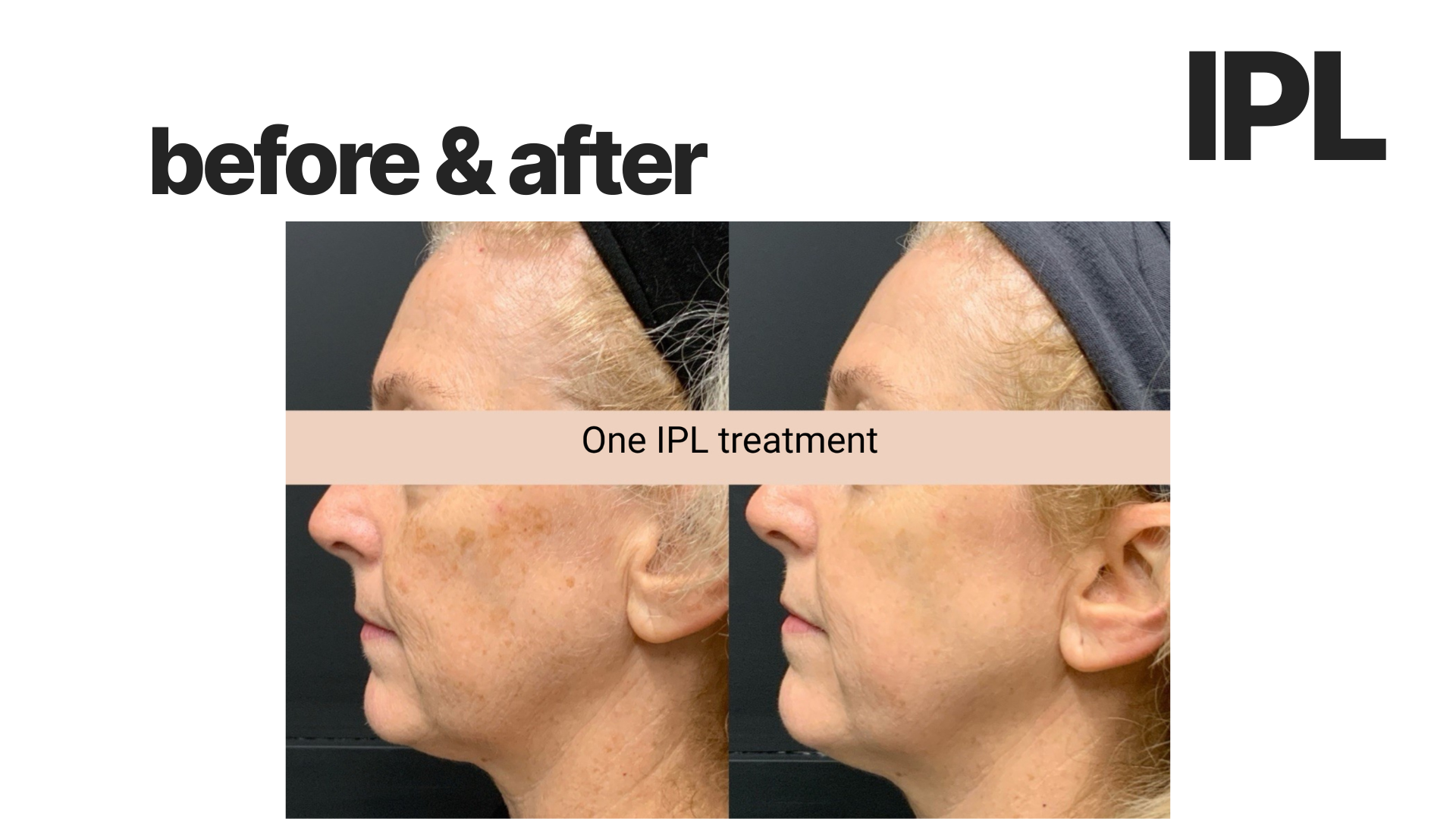
Pre-treatment considerations:
As with many of our treatments, it is imperative that your IPL be booked at a time when your treatment area is free of tan or recent sun (UV) exposure.
If you have a history of cold sores (HSV or herpes simplex virus), prophylaxis with antiviral (Valtrex) is recommended to prevent reactivation of the virus and an outbreak
Please inform us if you are using a sun sensitizing medication such as Accutane or doxycycline (all prescription medications should be reviewed with your provider prior to treatment)
Avoid neuromodulator treatments 2 weeks prior to treatment
Avoid topical retinol, AHAs, BHAs for 7 days prior to and following treatment
Do not wax, pluck or have laser hair removal in treatment area for a minimum of 7 days prior to treatment
Please arrive with clean skin, free of makeup or skincare products
Before you have any treatment - including IPL - at Midwest Laser Centre, your questions and concerns can be addressed during your consultation. We can help guide you to the most appropriate treatment(s) to reach your desired goals! IPL is a versatile treatment, but is best utilized on lighter skin types. Also, some skin conditions are best treated with other modalities. Trust the knowledge and experience of the Midwest Laser Centre team to help guide your treatment plan.
Incorporating IPL into your skincare routine can help you achieve a more youthful, radiant complexion without the downtime associated with more invasive procedures. IPL is associated with a shorter recovery time or “downtime” making it a very popular treatment to fit into many people’s lifestyles.
Lesion clearance often depends on the frequency of treatment sessions because the effect of pulsed light is cumulative, routinely requiring 3 or sometimes more treatments every 3-4 weeks for the full clinical effect to be achieved.
Lesions that are more heavily pigmented may require a higher number of treatment sessions. Lesions deeper within the dermis may also require more treatments as they are more challenging to reach. Because of this, IPL may be recommended in combination with other treatment modalities offered at Midwest Laser Centre to achieve the best results.
The Midwest Laser Centre team always recommends “homework” for your skin. High quality Alumier skincare compliments and works in combination with treatments to maintain results and prevent ongoing damage to the skin.
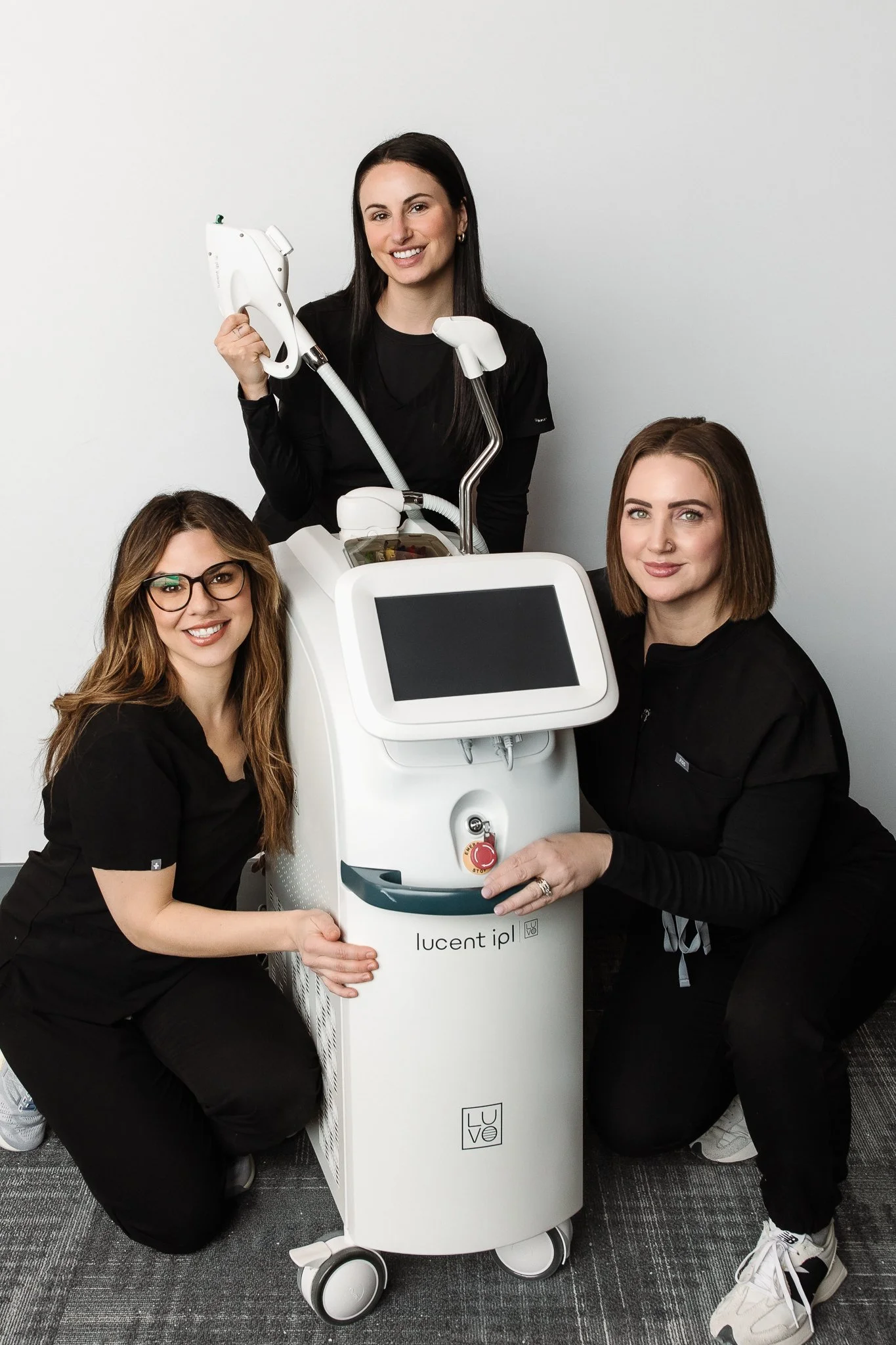
Photos are routinely taken at Midwest Laser Centre to document skin condition prior to treatment and to follow results.
Consent is taken, ensuring understanding of treatment, typical results, post-treatment recommendations, and possible side effects and risks.
After the skin is cleansed, an ultrasound gel is applied to the skin. During the procedure, a handheld device will emit pulses of light onto the targeted areas of your skin. You may feel a mild warming sensation or a slight snapping feeling as the light is applied. The entire session typically lasts about 30 to 60 minutes, depending on the areas being treated.
IPL procedure:
Post-Treatment Expectations and normal side effects of IPL:
After the session, you may experience some redness and mild swelling in the treated areas, which usually subsides within a few hours.
Over the next few days, pigment may darken, often described as a “coffee ground” appearance, and then gently flake off over the next week.
Gentle cleansing of skin and moisturizer is recommended along with use of a sunscreen with minimum SPF of 30 following treatment and reapply every 90-120 minutes with UV exposure.
You can expect to see improvements in your skin tone and texture in the weeks following the treatment. We may recommend a series of treatments done 3-4 weeks apart.
Possible risks of IPL:
Rarely, a blister or burn may occur, which can potentially scar
Hypopigmentation (skin whitening) or hyperpigmentation (darkening) may occur
Skin infection
Your Pre & Post Care.
Common Questions
-
There is very little downtime, and most clients return to work the same day. You may notice mild redness and a sunburn-like warmth for a few hours afterward. Treated brown spots will darken over the next day or two, and take several days to naturally exfoliate. You may wish to use makeup/concealer following the treatment. The redness or broken capillaries may look slightly more noticeable before they fade.
-
The treated pigment rises to the surface and looks like fine coffee grounds on the skin. It flakes off naturally within 7 to 10 days. Avoid picking or scrubbing, and let it shed on its own. Not all treatments will cause flaking of the skin. Some pigment is more superficial and its common to see this early on in your treatments.
-
No. IPL targets pigment, and a tan adds pigment to the skin, which increases the risk of burns and discolouration. Please avoid sun tanning, tanning beds and self-tanner for at least 4 weeks before treatment. After treatment, protect your skin with SPF 30 or higher and avoid sun exposure to maintain your results.
-
Results typically begin to appear a few weeks after your treatment; best results are seen with a series of IPL treatments performed at 3-4week intervals.
-
In most cases, results last months to a year or more. Consistency with sun protection and use of quality skin care (AlumierMD) at home will help maintain results. Maintenance treatments may be necessary.
-
Please contact the clinic for pricing HERE.