
Jet Peel - Transdermal Hydrofacial
Needle-Free Transdermal Delivery Powered by Jet Pressure Energy Technology
-
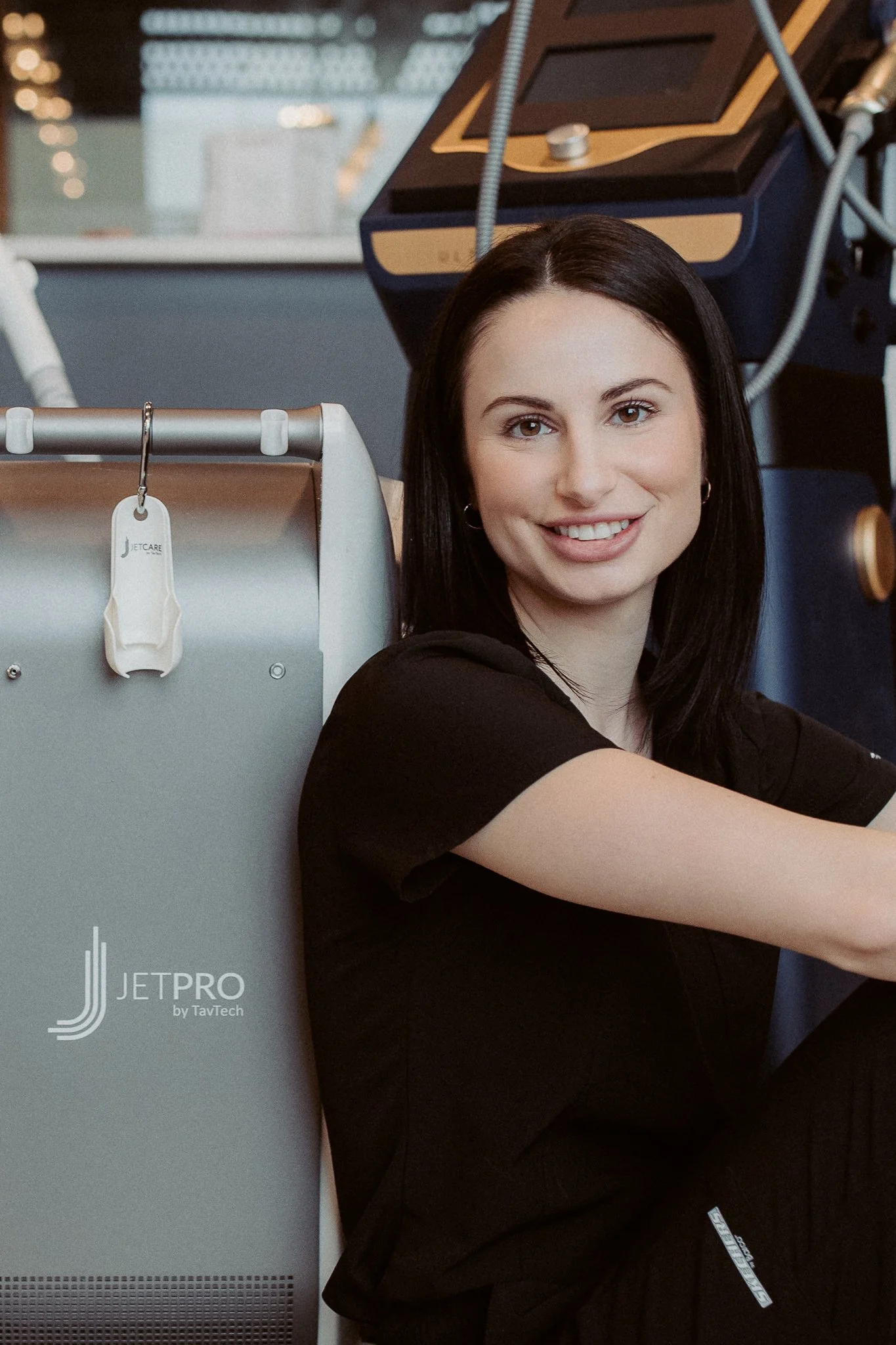
![A smiling woman with dark hair sitting next to medical or aerospace equipment in a laboratory or technical setting.]()
Hydrofacial
-
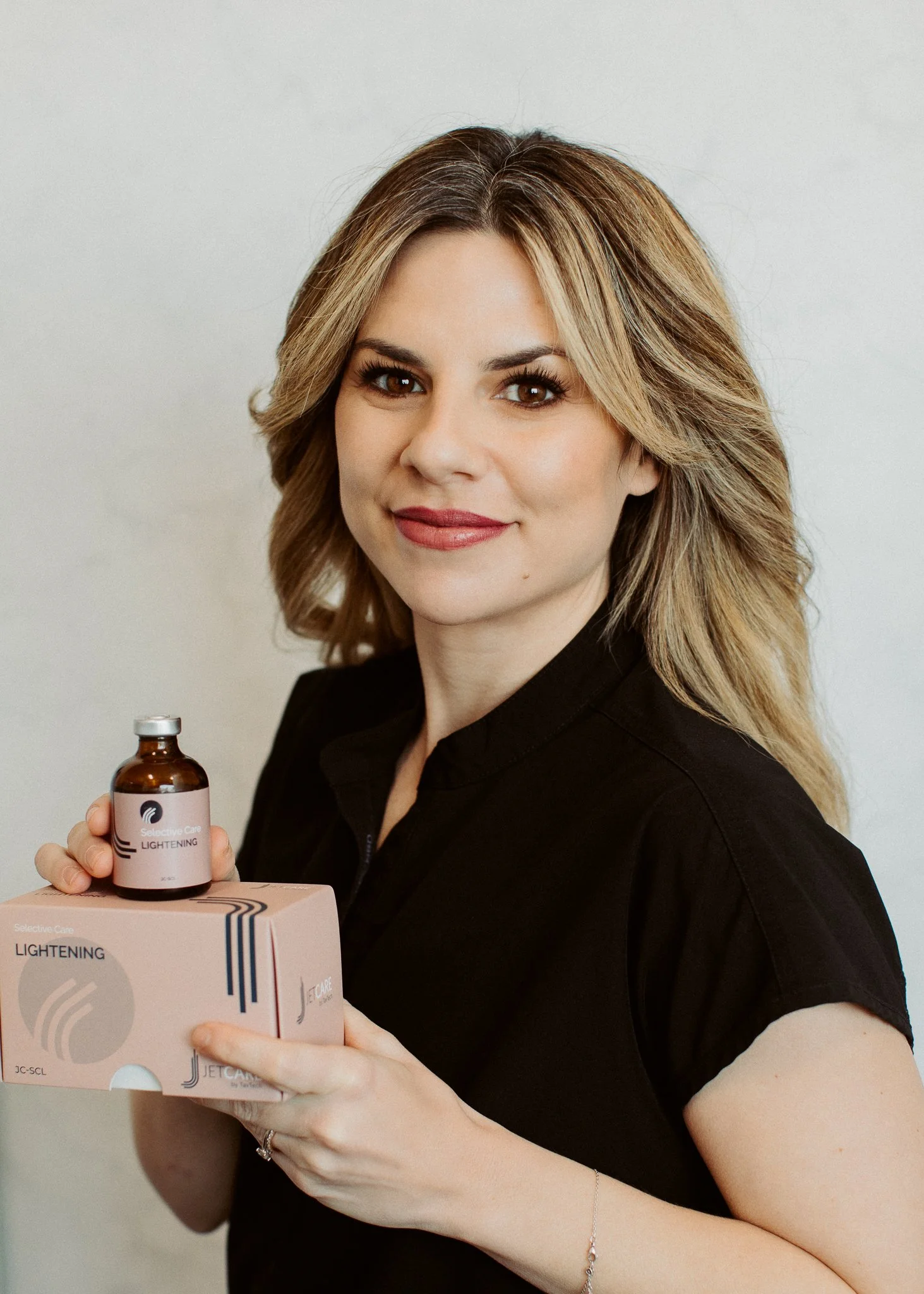
![Woman with blonde hair smiling, wearing a black shirt, holding a small brown bottle labeled 'LIGHTENING' and a pink box with similar branding.]()
Customized Infusions
-
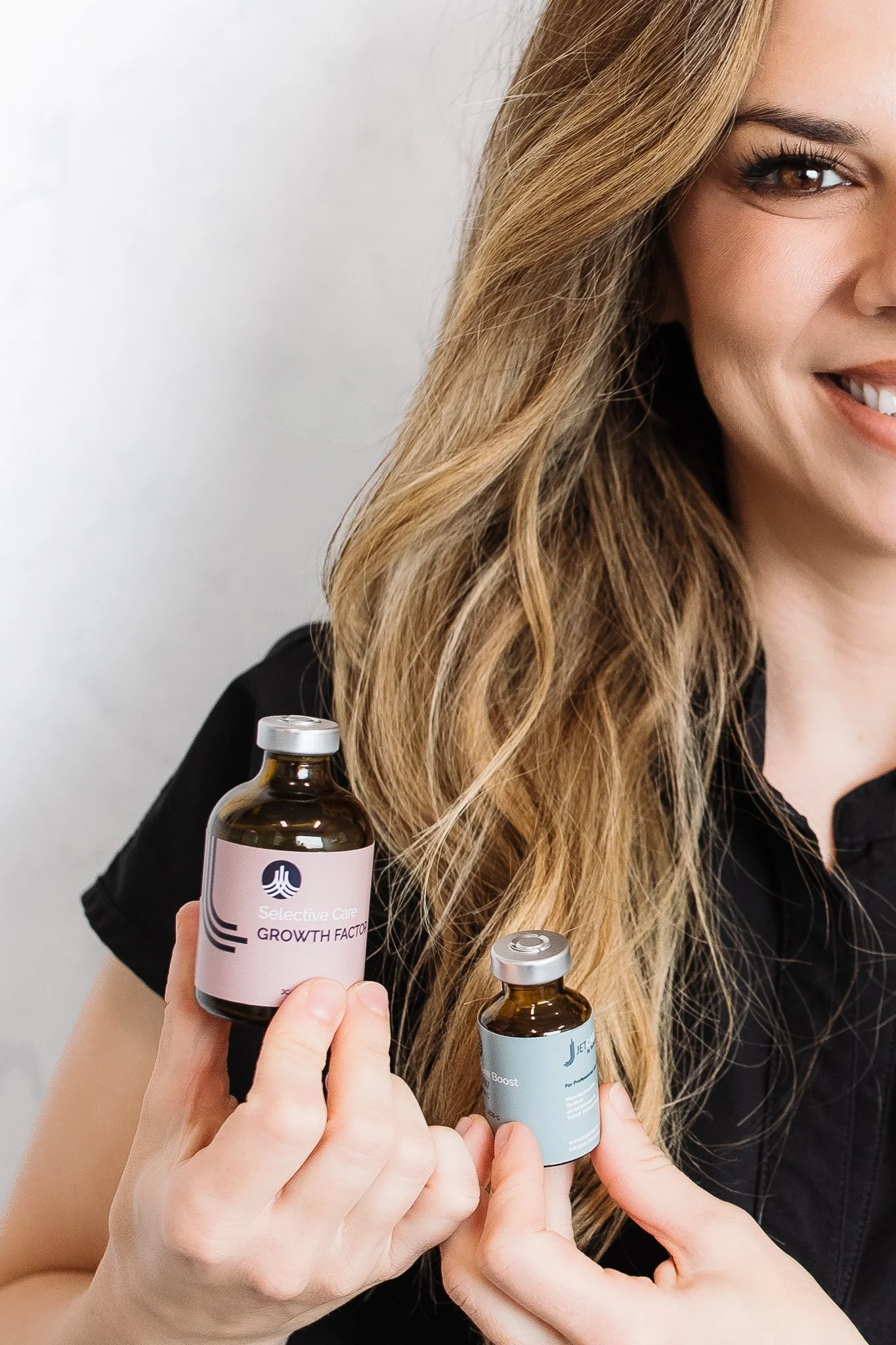
![A woman with long blonde hair holding two small bottles of health supplements, one labeled 'Selective Care Growth Formula' and the other 'Jet Peel Boost,' smiling and wearing a black shirt.]()
Add a Booster
-
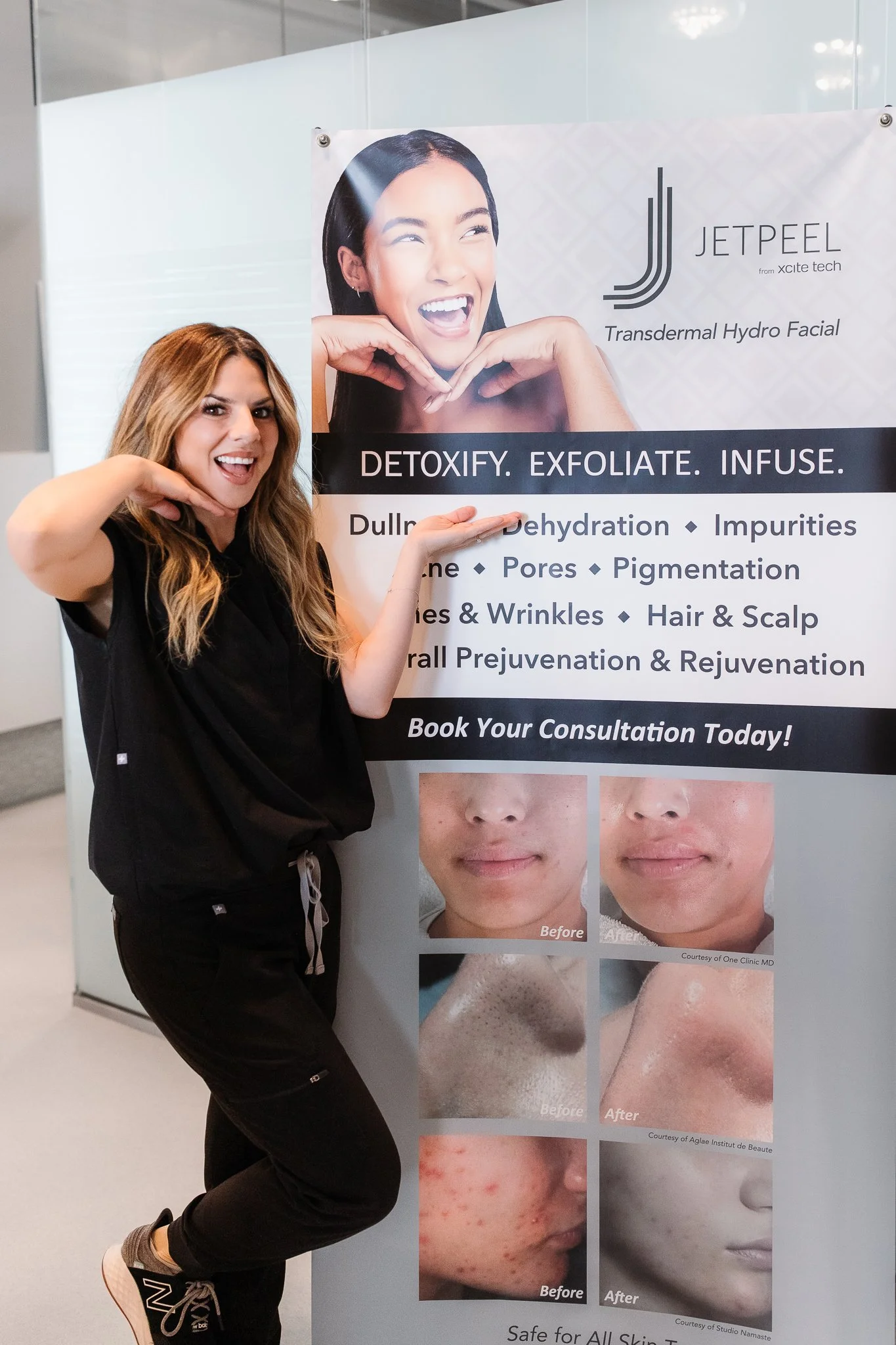
![A woman posing next to a promotional poster for JetPeel, a transdermal hydro facial treatment, showing smiling and giving a thumbs up. The poster lists benefits like detoxifying, exfoliating, infusing, and improving skin conditions with before and after images.]()
Jet Peel
What Is JetPeel?
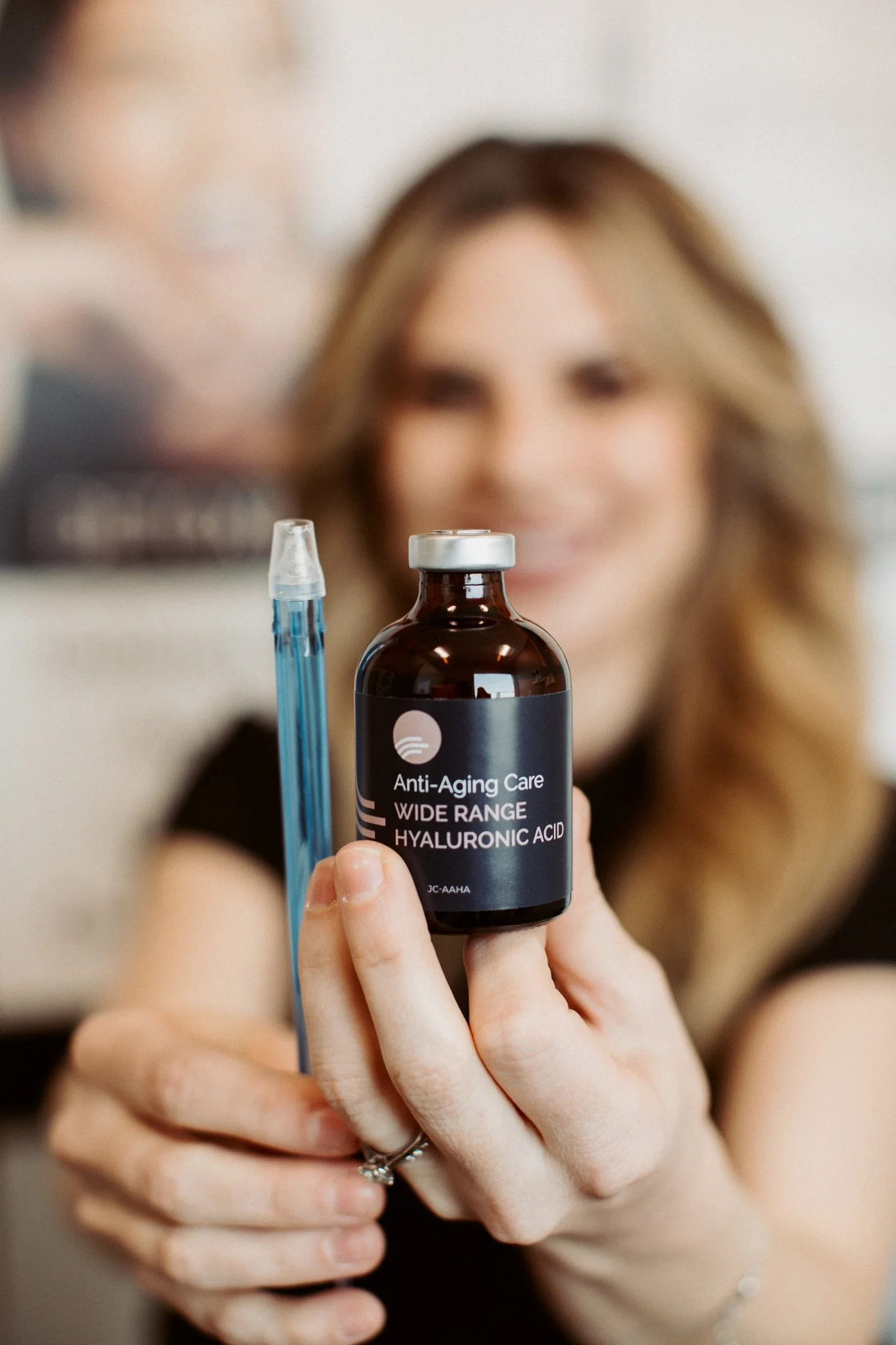
Unlike traditional facials or skincare products that stay mainly on the surface of the skin, JetPeel uses a powerful stream of air and liquid to gently cleanse, exfoliate, stimulate lymphatic drainage, and deliver nourishing ingredients deeper into the skin, without needles or discomfort.
Your skin's outer layer is designed to protect you by keeping most products out. That's why many creams and serums work only on the surface. JetPeel temporarily creates tiny pathways that allow nourishing ingredients like hyaluronic acid, peptides, and antioxidants to reach the deeper layers where collagen, elastin, and hydration are produced.
By delivering these ingredients where they can be most effective, JetPeel helps:
deeply hydrate and plump the skin
improve skin firmness and elasticity
reduce the appearance of fine lines
brighten dull, tired-looking skin
support healthier, younger-looking skin from within
Unlike treatments that rely on needles or controlled skin injury, JetPeel achieves these results without puncturing the skin. There is no bleeding and little to no downtime. The treatment provides advanced skin rejuvenation while keeping you comfortable and relaxed.
The Science Behind the Technology
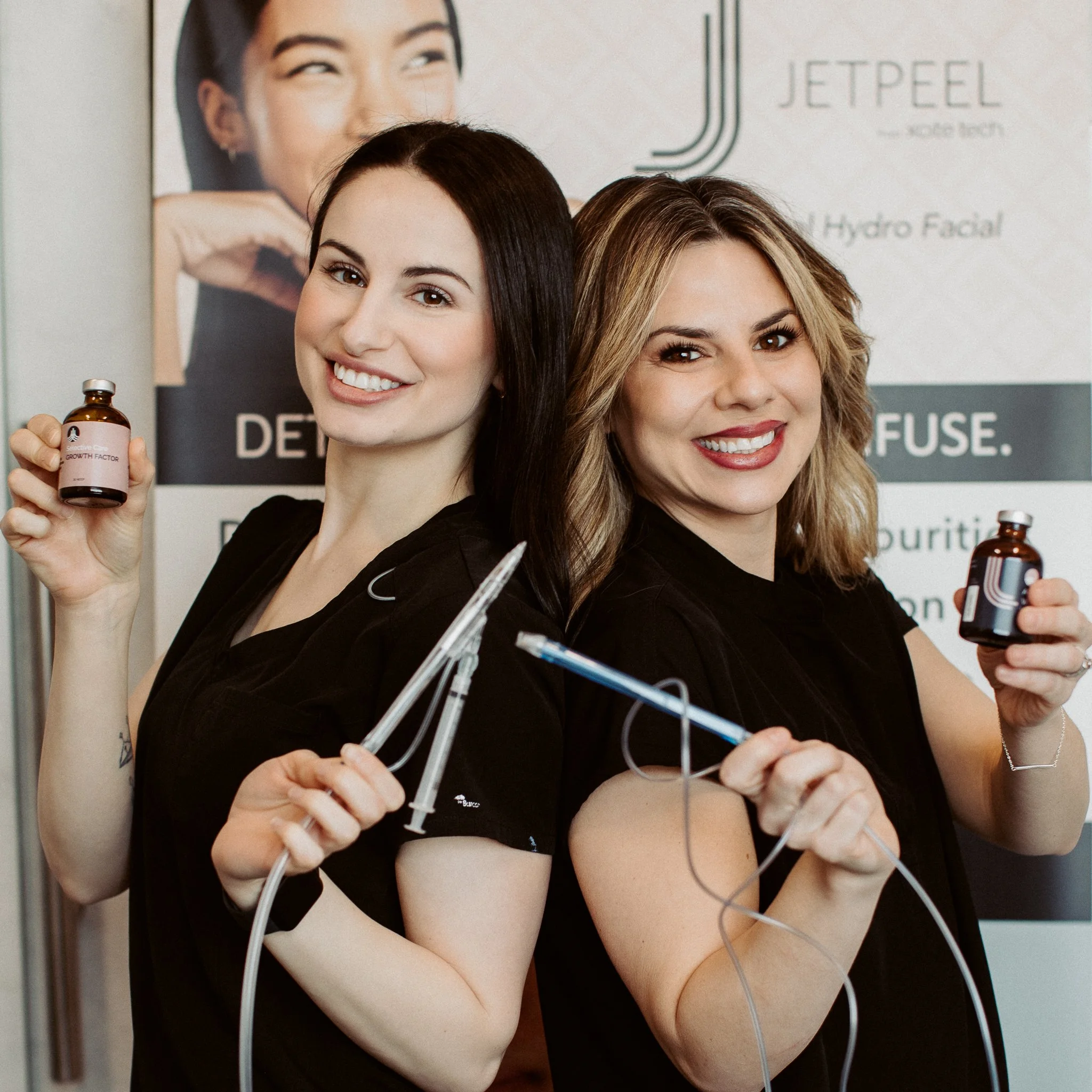
JetPeel's handpiece generates a continuous jet stream of micro-droplets combining liquid solution with pressurized gas, traveling at subsonic speeds over 200 meters (about 660 feet) per second . When directed at the skin's surface, this jet stream produces temporary microscopic channels in the outermost layer of the epidermis. These channels allow topically applied solutions to bypass the skin's natural barrier and reach the deeper dermal layers without the needles, tissue trauma, or bleeding associated with mechanical microneedling.
Because the technology relies on fluid dynamics rather than mechanical puncture or thermal energy, the treatment is classified as non-invasive and non-ablative. This mechanism allows for the consistent, controlled delivery of active ingredients while minimizing tissue disruption, supporting both patient comfort and a favorable safety profile for repeated clinical use.
The Three-Stage Clinical Protocol
Lymphatic Massage: The handpiece is first used in a gentle mode to stimulate microcirculation and lymphatic drainage, helping to clear metabolic waste and prepare the tissue for treatment.
Exfoliation: The jet stream is then applied at an angle to lift dead corneocytes and surface debris from the stratum corneum, refining texture and priming the skin for absorption.
Trans-Epidermal Infusion: In the final stage, the device delivers active, formulated solutions through the microchannels created in the epidermis, allowing nourishing ingredients including hyaluronic acid, peptides, antioxidants, and botanical extracts to reach deeper skin structures.
Clinical Benefits
Deep hydration and improved barrier function
Reduced appearance of fine lines and wrinkles through supported collagen activity
Improved skin tone, texture, and clarity
Decongestion of pores and management of mild acne
Stimulated microcirculation and lymphatic drainage
No needle penetration, no thermal injury, and no recovery period
What to Expect
A treatment session typically runs 30 to 75 minutes, depending on the protocol and treatment area. Patients generally experience a light, cooling pressure accompanied by a soft airflow sound. You will experience a cold sensation across the skin. The ears will be protected from the blowing air with disposable ear plugs. Because the process does not involve needles or heat-based ablation, no topical anesthetic is required. Mild, transient redness may occur and typically resolves within a few hours; there is no true downtime. Clients typically achieve full clinical benefits with a recommended series of four to six sessions, spaced approximately one week apart, followed by monthly maintenance visits to sustain results.
Common Questions
-
The treatment is used to support hydration, reduce the appearance of fine lines and wrinkles, improve tone and texture, and manage congested pores and mild acne.
-
Many patients notice visible improvement after a single session. A series of four to six treatments, spaced about 2-6 weeks apart, is commonly recommended for optimal results, with monthly maintenance sessions thereafter.
-
None. Mild, temporary redness may occur immediately after treatment, but patients can resume normal activities right away. Avoiding makeup for a few hours afterward is generally recommended.
-
No. Because the technology delivers active ingredients through temporary microchannels created by a fluid jet stream, rather than needle penetration, most patients describe the treatment as comfortable and pain-free.
-
Both approaches aim to deliver active ingredients into deeper layers of the skin. Microneedling relies on mechanical needle penetration to create channels, while JetPeel uses a pressurized fluid jet stream to achieve trans-epidermal delivery without needle contact, tissue trauma, or bleeding.
-
Because the treatment does not rely on needle penetration, heat, or harsh mechanical abrasion, it is generally well tolerated even by sensitive and reactive skin. Your provider will select the appropriate solution and jet settings for your skin’s condition.
-
Yes. JetPeel is commonly incorporated alongside microneedling, dermaplaning, and other resurfacing or infusion-based therapies. Your provider can help design a combination protocol suited to your clinical goals.
-
Hydration and glow from a JetPeel typically last from several days up to 2–3 weeks after a single treatment. Immediate results—noticeable plumping, smoothness and radiance—are often visible right away because the treatment delivers a saline solution, serums and pressurised oxygen to exfoliate, hydrate and infuse skin. The peak of that fresh, dewy appearance is usually in the first 48–72 hours.
Multiple treatments produce a cumulative effect. With a series (commonly spaced 2-6 weeks apart depending on skin needs), the skin’s baseline hydration, texture and radiance improve more durably. After an initial course of 3–6 sessions many clients report that their skin stays noticeably more hydrated and glowing for months, with maintenance treatments (for example every 4–8 weeks) helping to preserve the outcome.
Factors that influence how long results last
Skin type and baseline condition: dehydrated or mature skin may absorb and retain moisture differently than well-hydrated, youthful skin.
Aftercare: using a suitable moisturiser, gentle cleansers, sunscreen and avoiding over-exfoliation extends results.
Lifestyle: hydration, diet, sleep, alcohol, smoking and sun exposure all affect skin longevity.
Products used during the JetPeel: serums with hyaluronic acid, antioxidants or vitamins tend to impart longer-lasting hydration and glow.
Frequency of treatments: regular maintenance sessions prolong and stabilise improvements.
Practical expectations and recommendations
Single treatment: great for an immediate “event” boost—hydration and glow last several days to about 2–3 weeks.
Short course (3–6 sessions): can extend visible improvements to several months and raise your skin’s baseline radiance.
Maintenance: schedule touch-ups every 4–8 weeks (or as recommended by your clinician) to sustain results.
Combine with a tailored home-care routine (hyaluronic acid, antioxidants, broad-spectrum sunscreen) to maximise and lengthen benefits.
-
Please contact the clinic for Jet Peel pricing HERE.