
Injections for Hyperhidrosis - excessive sweating
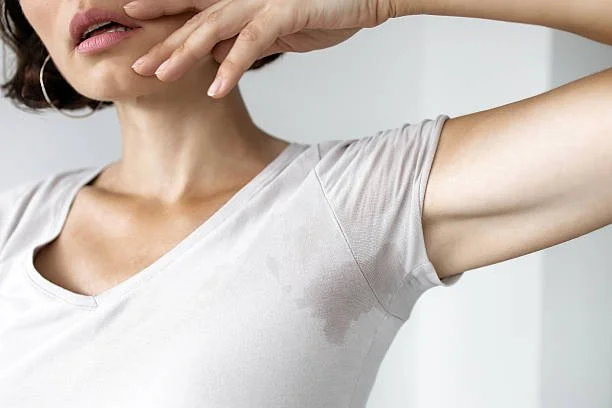
Therapeutic Botox for Hyperhidrosis
Hyperhidrosis is excessive sweating beyond what would typically be attributed to heat or exercise. The excess sweat soaks through clothes and drips or “runs”. This type of sweating can disrupt your day, cause social anxiety, and interfere with work or educational goals.
The sweating is bilateral and is commonly reported in the axilla (armpits), but it can also occur from the scalp, hands (palms), and feet (soles). It can be triggered by stress, anxiety, nervousness, warm temperatures, or physical exertion, and sometimes even by spicy foods, alcohol, or caffeine.
The pathophysiology of primary hyperhidrosis is not fully understood, but it is believed to be a disruption of the autonomic nervous system that causes hyperstimulation of the eccrine sweat glands. There is no medical cause, and it can run in families (genetic).
Secondary hyperhidrosis is caused by an underlying medical condition such as diabetes or thyroid problems, and certain cancers and nervous system disorders. Certain medications can also contribute to excessive sweating. Consult your physician to rule out secondary causes before considering Botox treatment.
If your symptoms don’t improve with regular antiperspirants, your physician may recommend:
Topical treatment with clinical-grade aluminum chloride hexahydrate (drysol).
Clinical-grade antiperspirants with a higher concentration of aluminum chloride and alcohol.
Systemic medications such as anticholinergics that cause a drying reaction in the body. These medications may cause side effects such as dry mouth and dry eyes, and may lose effectiveness over time.
Iontophoresis for hands and feet
With iontophoresis, each hand or foot is immersed in a tray containing a water-soaked pad. The pads are connected to a low-intensity electric current that passes through the liquid. The current passes through the skin to disrupt sweat glands’ function.
The treatment is initially repeated several times, but once control is achieved, a single treatment can be effective for several weeks. Initial iontophoresis treatment takes about 30 minutes per treatment site at least four days per week.
There is a potential for skin irritation, and this application is usually not recommended for underarm or facial/head hyperhidrosis.
Surgical management is often a last resort when conventional therapies have failed.
Hyperhidrosis of the hands can be treated with a procedure known as endoscopic thoracic sympathectomy (ETS). In ETS, often performed on an outpatient basis, doctors cut or clip the nerves causing abnormal sweating.
The surgery for underarm sweating (axillary hyperhidrosis) is excision of axillary glands, that is, the removal of the sweat glands. Some patients report immediate symptom relief. Follow-ups show that in many cases, sweating remains reduced for at least several years after surgery.
Risk of compensatory sweating may be associated with surgical procedures for sweat reduction.
Botox Injections for Hyperhidrosis
Botulinum toxin (Botox) injections are an effective option for people with moderate to severe hyperhidrosis, with clinical studies showing  a reduction in sweating of 80 to 85% for roughly 90% of treated individuals. The treatment works by injecting small amounts of botulinum toxin into the skin with a very fine needle; this interrupts the nerve signal to the sweat glands, reducing perspiration in the targeted area. Many patients tolerate the injections well, though some prefer a topical anesthetic for comfort. More discomfort is noted with injections to the palms of the hands and soles of the feet.
Full effect can take up to two weeks to develop and typically lasts four to six months, with the possibility of longer-lasting results after repeated treatments. Common side effects are usually mild and include tenderness, redness, swelling, and occasional bruising at injection sites. Rare but serious risks have been reported, including vision problems, breathing or swallowing difficulties, or severe muscle weakness. An uncommon side effect is increased sweating in other body areas (compensatory or paradoxical hyperhidrosis).
Eligibility, Coverage and Cost of Therapeutic Botox for hyperhidrosis:
At Midwest Laser Centre we provide therapeutic Botox treatment for hyperhidrosis. A referral by your family physician is required.An appointment is booked with the physician at Midwest Laser Centre to explain the treatment, side effects, and risks, and to review your medical history and complete insurance forms.Please bring a detailed history of current and previous treatments you have tried for hyperhidrosis and your secondary health insurance forms to your initial appointment.
A prescription for therapeutic Botox is sent to the pharmacy. The pharmacy sends the prescription directly to Midwest Laser Centre following a cold chain protocol to ensure the integrity of the Botox. Your first treatment is usually booked three to four weeks after your initial appointment at Midwest Laser Center to allow time to obtain coverage approval through your secondary health insurance provider.In Saskatchewan, the provincial health plan covers treatment only of axillary (underarms) hyperhidrosis.
The clinic will apply on your behalf for EDS coverage for treatment of axillary hyperhidrosis; this coverage allows the physician to bill Sask Health directly for the injection fee.The Saskatchewan provincial health plan provides no coverage for craniofacial (scalp), palmar (hands) or plantar (feet) hyperhidrosis, and the patient pays the injection fee at the time of treatment. Private health plans may cover all or part of the costs associated with hyperhidrosis treatment.Before approving coverage for Botox, many insurance companies require that other preventative medications have failed and require documentation of these medications tried and the dates trialed.Most insurance companies do not cover the injection fee, which is paid at the time of treatment.
Common Questions
-
While sweating is a body function required for temperature control, localized body areas house only a small percentage of the body's sweat glands (the underarms, for instance, are home to less than 2% of the body’s sweat glands).
The temporary cessation of these sweat glands' functioning, therefore, has little to do with body thermoregulation. -
In the case of palmar (hand) excessive sweating, research shows that Botox is 80 to 90% effective. Repeat injections are recommended every 4-6 months. Botox for palmar sweating can cause temporary pain and weakness in the hands.
Botox can also be used for plantar hyperhidrosis (excessive sweating of the feet), but patients report more pain during plantar injections and statistics indicate the treatment is less effective than when used for other body sites; indeed, some data suggests that 50% of patients are dissatisfied with the results. Iontophoresis is a good treatment option for palms and soles of the feet.