
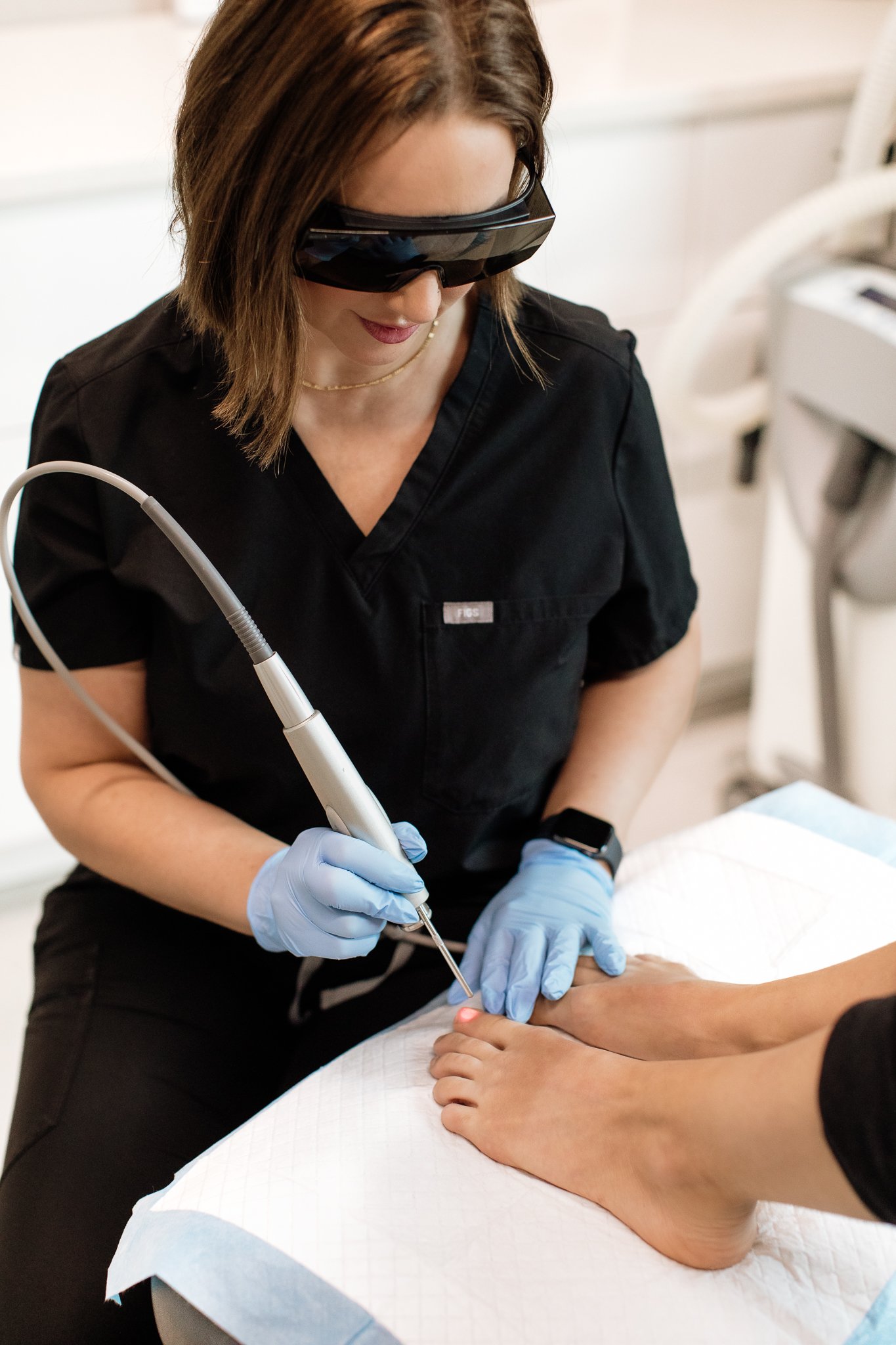
ClearSteps - Laser Toe Fungus Treatment
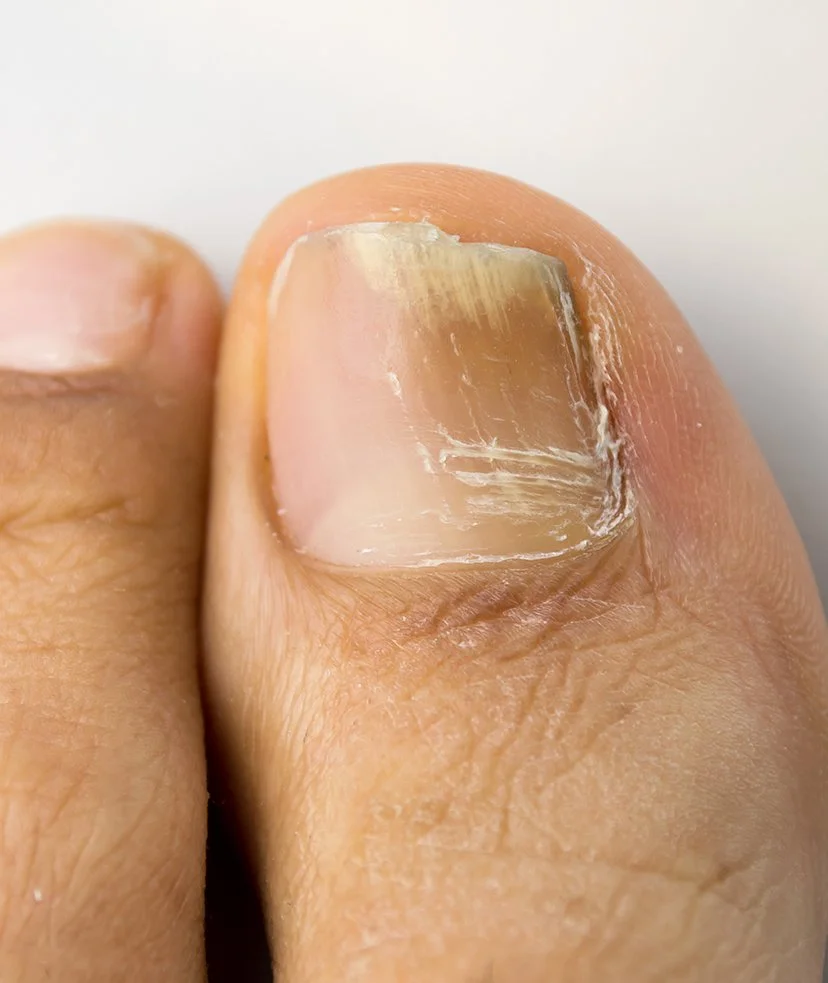
Toenail fungus (onychomycosis)
Toenail fungus is a common infection of the nails, causing them to become yellowed, white and crumbly, thick and brittle. Severe infections can lead to a foul odor and pain.
As many as 1 in 10 people are affected, and up to 50% after age 70.
Infection occurs when fungus enters nail or nail bed through cracks or injured areas. As fungi thrive in warm, moist environments, infections area commonly acquired is such spaces as public showers, pools, lockers, and nail salons where strict sanitization protocols are not followed.
Prevention:
Keep feet clean and dry and inspect and treat skin and nail injuries promptly.
Wear sandals in public showers, pools, and locker rooms.
Do not share towels, nail files or clippers.
Treat athlete’s foot (tinea pedis) promptly to avoid spread of fungus to nails.
Diagnosis:
Your physician can usually identify toenail fungus simply by looking at your toe. Sometimes, a scraping from underneath your nail will be taken and sent for testing to confirm the diagnosis and strain of fungus.
Medical treatments of toenail fungus:
Topical anti-fungal medications (nail lacquer) can be prescribed by your physician.
well tolerated with minimal side effects such as skin irritation around nail bed
no liver toxicity unlike oral antifungals
must be applied consistently for a year
efficacy ~50% when used as prescribed and with removal of the unattached, infected nail area
Oral anti-fungal prescription:
indicated for severe infections
long treatment time (minimum 12 weeks for most prescriptions)
can have side effects and interactions with other medications
can cause liver toxicity
efficacy up to 60%
Laser Treatment for toenail fungus:
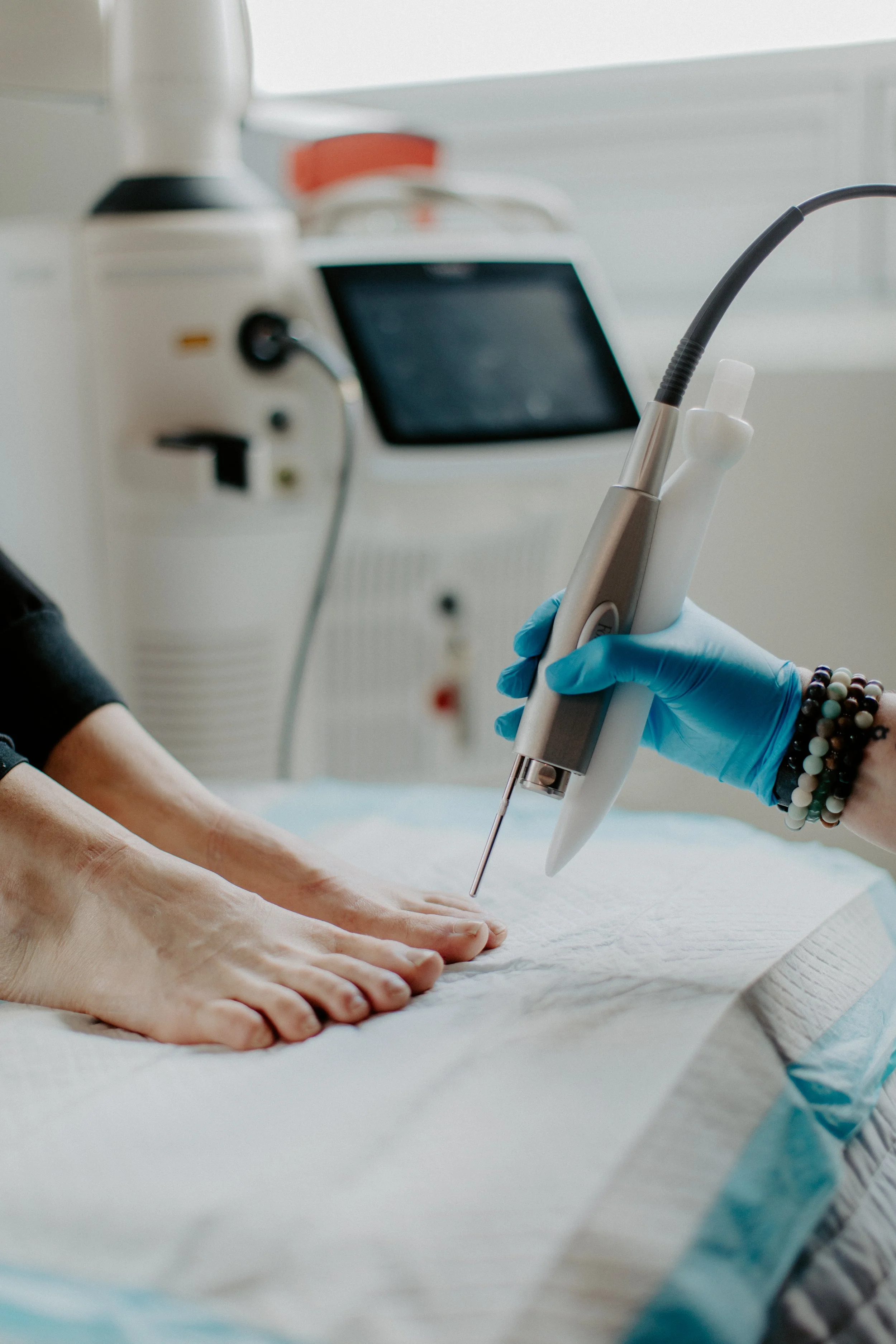
At Midwest Laser Centre Nd:YAG laser light is used to target the fungal infection in the nail and surrounding tissue. The laser light heats evenly throughout the depth of the affected nail and skin tissue, weakening and killing fungal organisms in the affected toenails.
Multiple treatment sessions are required, performed on a weekly basis for a minimum of 4 weeks; full results with new nail growth usually require a full year.
Minimal side effects of laser:
Discomfort is a fleeting hot sensation
Redness and swelling around the nail typically resolves quickly
Risks:
Rarely, a blister/burn
Treatment failure ~25%
At Midwest Laser Centre the physician recommends the use of topical antifungal prescription used in conjunction with laser treatment to optimize the success rate, and in cases of recurrence or resistance to treatments.
Prior to your laser treatment:
Clean (no polish) and file nails down to allow the laser light to penetrate fully.
Use disposable files and do not reuse them.
Continue to use topical prescription of antifungals each night before and during your laser treatments.
Wash and dry socks on hot to kill fungus.
Keep shoes dry and use an antifungal spray
What to expect at your appointment for laser treatment of toenail fungus:
Treatment will be reviewed and consent and photos obtained.
You will be required to wear laser safety goggles to protect your retinas.
The laser technician will perform the treatment with the Nd:YAG laser, with the pulses covering the entire nail and surrounding nail tissue. You will feel a heating sensation throughout the nail. If the sensation is too hot, we take a break from laser pulses and apply pressure to the nail which helps ease the discomfort.
All the nails will be treated because fungus often “lurks” in the surrounding nails, even when visible signs of infection are absent.
Treatments are performed weekly for a minimum of 4 weeks.
Reassessment is recommended in 8 to 12 months to evaluate the treatment’s effectiveness.
Toenail fungus is notoriously difficult to treat and has a high recurrence rate. Laser treatment is as effective as and often more effective than topical and oral antifungal medications, with fewer side effects and risks.
If treatment fails or if fungus recurs, re-treating with the Nd:YAG laser is safe.
Common Questions

-
Most clients need a series of 4+ treatments spaced 4 weeks apart. More severe or long-standing infections, or infections involving several nails, may require additional sessions.
-
The laser heats the nail and nail bed to target the fungus without damaging the surrounding skin. The damaged portion of the nail will not suddenly clear. Instead, you will see healthy, clear nail growing in from the base as the old nail grows out. Because toenails grow slowly, it can take 9 to 12 months for a big toenail to fully grow out and show the result.
-
Once the infection has cleared, results can be long lasting. Nail fungus is common in the environment, however, and reinfection is possible. Keeping feet clean and dry, changing socks daily, wearing sandals in public showers and pool areas, and treating shoes and athletic footwear all help protect your results. We may also recommend a topical antifungal as part of your home care.
-
Laser treatment is a good option for adults with mild to moderate nail fungus, particularly those who have not had success with topical treatments or who prefer to avoid oral antifungal medication. It is also a good choice for people who cannot take oral medication due to liver concerns or interactions with other prescriptions.