
nd yag for sunspots
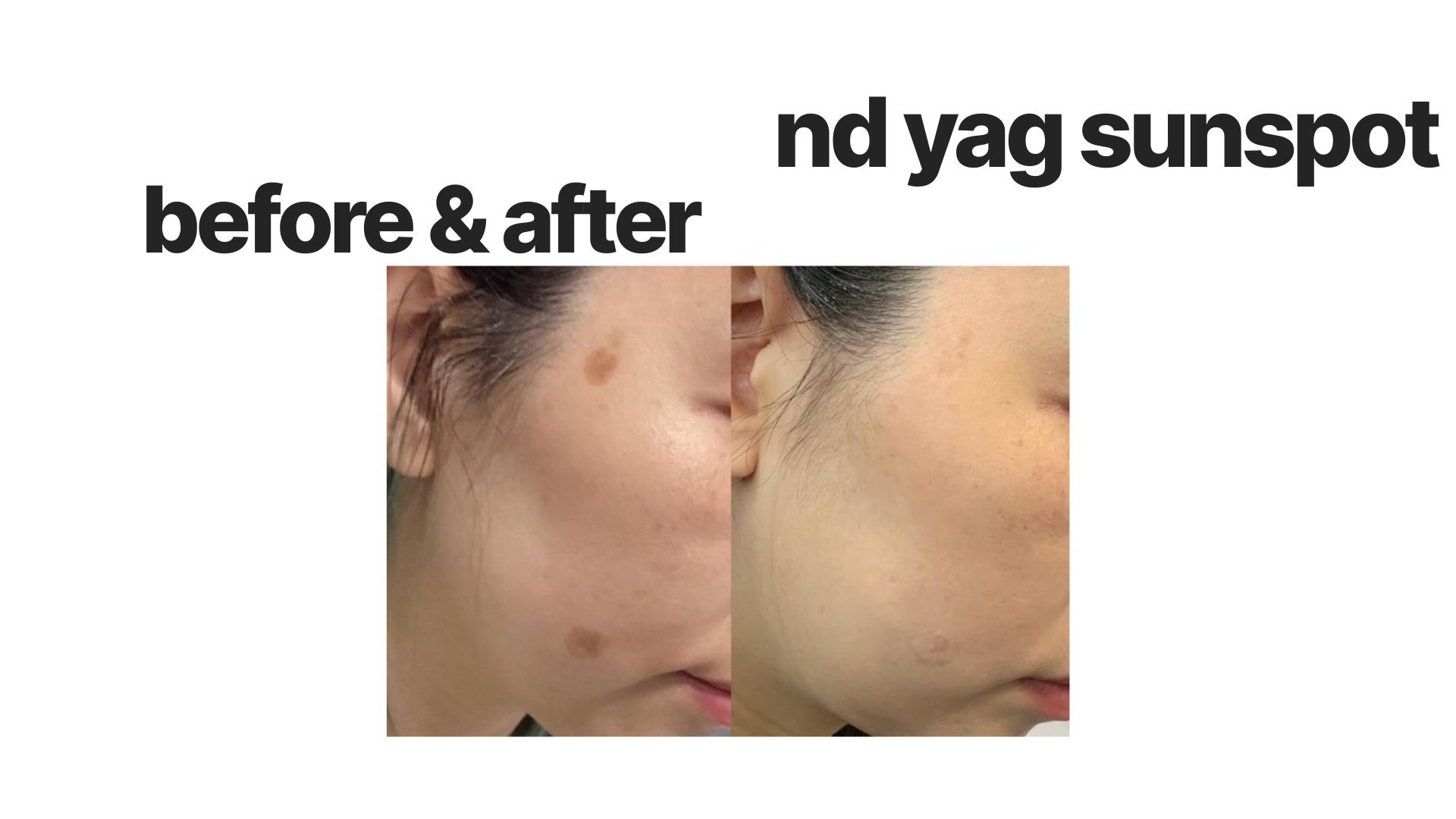
Nd:YAG Laser Treatment for solar lentigines aka sunspots
The acronym “LASER” stands for light amplification by stimulated emission of radiation. A laser works by emitting a wavelength of high-energy light. This light can be focused on a target (chromophore, or pigment) to create heat and destroy the cells. Wavelengths are measured in nanometers (nm).
Various kinds of therapeutic lasers are differentiated by the medium that produces the laser beam. Each of the different lasers’ wavelengths has a specific use based on its ability to be absorbed into its targeted chromophore, or pigment.
The Nd:Yag laser is a Neodymium-doped yttrium aluminium garnet laser in Q-switched mode producing two wavelengths - 1064nm (deeply penetrating), and the second beam of 532nm (more superficial).
Midwest Laser Centre has a Lutronics Q-switched Nd:Yag laser utilized for pigmented lesions (sunspots and freckles) and tattoo removal.
Midwest Laser Centre provides a free Consultative process at which:
Your presenting concern will be reviewed and confirmed appropriate for PDL treatments.
Your medical history will be reviewed to ensure you are a candidate for treatment and that there is no present contraindication to Nd:Yag treatment.
The Nd:Yag treatment will be explained and guidance provided on the number of treatments recommended.
Most sunspots require one to three sessions performed at three- to four-week intervals.
Extensive or large lesions may require more treatments.
Pretreatment requirements will be discussed.
Nd:Yag treatments must be performed on untanned skin (free of recent sun or UV exposure and no self-tanning effect left on treatment area).
Medical history and medication use on your intake form are reviewed. If there is a contraindication to treatment it will be discussed.
Prophylaxis of HSV (cold sores) may be advised.
Your concerns are addressed and your questions are answered.
Nd:Yag Laser Treatment:
Depending on the area to be treated, you might be asked to remove articles of clothing. You will be draped respectfully during treatments.
You will be required to use protective eye wear (goggles) to prevent damaging your retina,which contains dark pigment.
The laser will be pulsed in the treatment area. You will feel the heat of each pulse, described by most as a hot prickly sensation like an elastic band snapping against your skin.
Most people find the discomfort easy to tolerate. Ice packs can be used for patient comfort and safety.
Treatments are relatively quick, with most done within 30 minutes.
Post care following Nd:Yag laser treatments:
Immediately following treatment, an ice pack might be applied for comfort.
In the first few days after treatment, avoid use of abrasive cleansers and avoid scrubbing the treated area.
Bandages are not necessary except to prevent abrasion to the treated area.
If a crust forms, avoid picking or removing it; apply Aquafor or Polysporin until healed.
Avoid saunas and hot baths; wear loose clothing to avoid rubbing treatment areas.
Sun/UV protection with a minimum SPF of 30 is essential to reducethe risk of pigment changes.
Rebook for subsequent Nd:Yag laser treatment as recommended, depending on the condition.
Common Side effects of Nd:Yag laser treatments:
Mild discomfort during treatment
Increased redness
Swelling
Mild temporary sunburn sensation
Crusting of treated area
Infrequent risks of PDL treatment:
Pigmentary changes – hyperpigmentation (darker/brown patchy skin) or hypopigmentation (paler/white skin)
Blister/burn
Infection
Rarely, scarring